
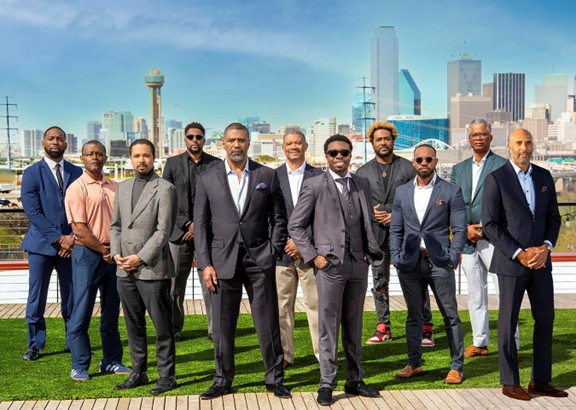

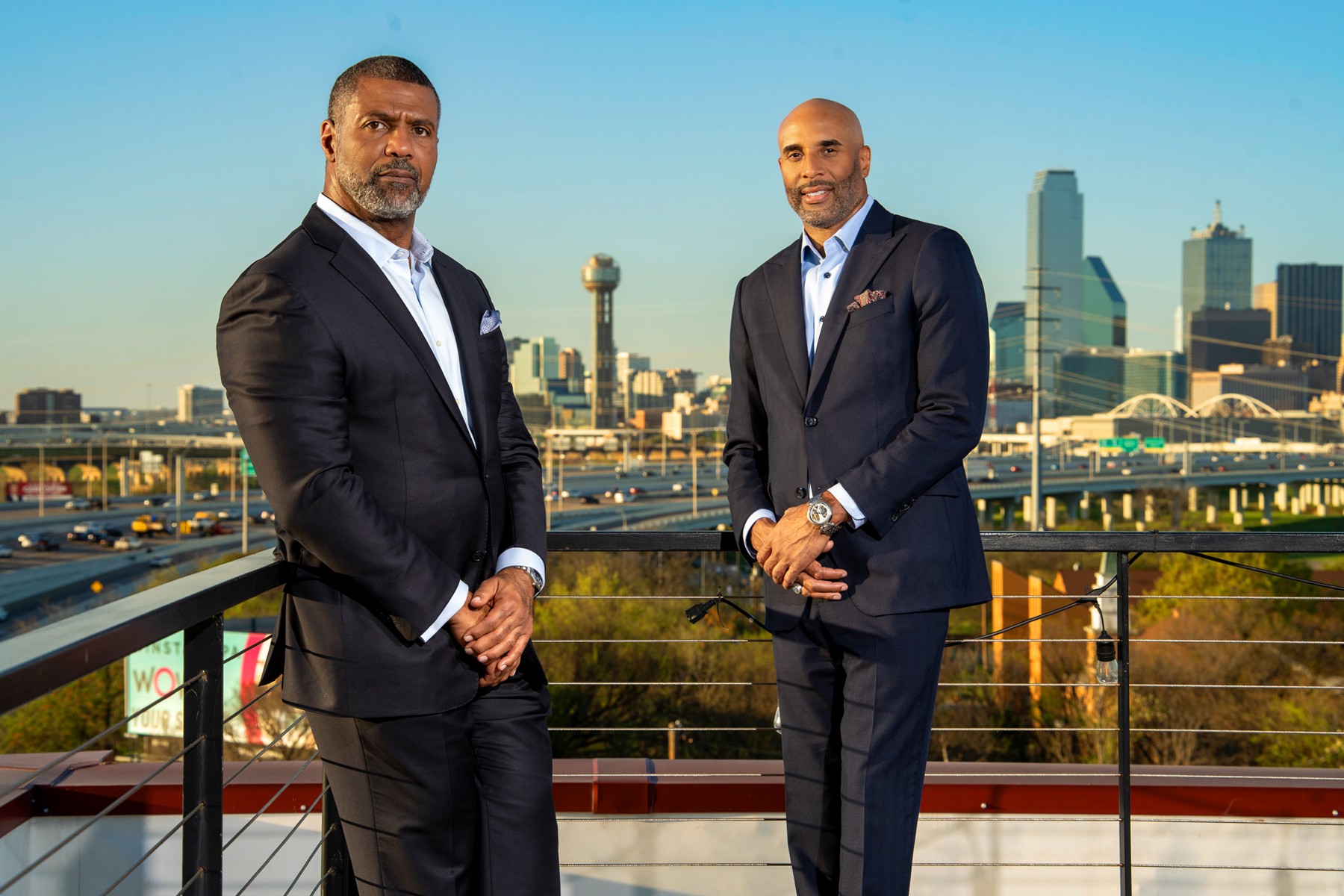
 The African American Museum, Dallas announces the formation of The Mandela 12: Guardians of the Journey—a cross-sector team of African American leaders mobilizing their influence, networks and resources to support Mandela: The Official Exhibition, opening June 13 – November 1, 2026.
The Mandela 12 are leaders across sectors including finance, law, philanthropy, entrepreneurship, education and social services. Each brings a demonstrated record of community service, mentorship and civic engagement, reflecting a shared commitment to strengthening Dallas through leadership that extends beyond professional success into public responsibility. As Dallas prepares for increased global attention through FIFA, the international soccer activity coming to North Texas, the exhibition arrives at a moment when Mandela’s use of sport as a unifying force feels especially relevant—connecting global history to local classrooms, playing fields and community spaces.
Chaired by Karl Biggers, who convened the group, The Mandela 12 represent a model of collective leadership grounded in trust. Their dynamic reflects the principles articulated by Nelson Mandela: “Honesty, sincerity, simplicity, humility, courage, etc.
At a time when leadership is being redefined across sectors, The Mandela 12 signal an expanded understanding of who participates in cultural stewardship. This all-male leadership group is not intended to be exclusionary; rather, it reflects a deliberate investment in engaging African American men as visible, accountable leaders in civic and cultural life—broadening assumptions about philanthropy, leadership and participation in the arts.
The Mandela 12 also represents a new generation of museum patrons—leaders who understand that time, talent and financial resources form the foundation of sustaining educational and cultural institutions. While not members of the Museum’s Board of Directors, they work alongside the Museum’s Board of Directors, forming a unified body of trusteeship grounded in shared responsibility for the institution’s future.
The committee includes Karl Biggers (Chairman), Dorian Goodwin (Vice Chairman), Jason Harkey, Antonio Kidd, Sienzhi Kouemo, Mark Malveaux, KC Nlemchi, Matthew Osborne, Trey Pugh, Byron Sanders, Ian Shaw, and Rodney Thomas.
Collectively, the group seeks to position the exhibition not only as a cultural event, but as a civic moment supported by leaders who understand how institutions, communities and resources intersect. KC Nlemchi, who serves on the leadership team of a major Dallas sports franchise, brings additional perspective on how corporate and sports organizations can contribute to civic and cultural initiatives, including meaningful support for the Mandela exhibition.
Several members bring deep experience in corporate and financial sectors, strengthening the Museum’s ability to engage business leadership and expand philanthropic participation. Others contribute longstanding involvement in community-based and social service organizations, ensuring that the exhibition remains grounded in access, inclusion and public benefit.
For Jason Harkey, a former collegiate soccer player and current high school teacher and coach, this work is closely tied to his commitment to young people. He connects Mandela’s understanding of sports as a unifying force to emphasize to young people how leadership can show up their daily lives.
One of the core goals of The Mandela 12 is to help ensure that at least 6,000 sixth-grade students from Dallas ISD and area schools experience the exhibition between August and November. This effort reflects a coordinated commitment to work alongside Museum leadership, the Dallas Independent School District, parents and volunteers to create meaningful early exposure to history, leadership and cultural memory.
For Karl Biggers, the connection to Mandela’s legacy dates back to a defining moment early in his professional life—watching global news coverage of Mandela’s release from prison on a Sunday morning, an experience so significant that even being late for church was forgiven.
For Ian Shaw, his service on The Mandela 12 is directly connected to his professional commitment to developing future leaders in Dallas. That connection is made visible through Sienzhi Kouemo, a member of The Mandela 12 and an alumnus of a leadership initiative Shaw leads.

Kouemo, the youngest members of the 12 and a professional with United Way of Metropolitan Dallas, represents the next generation of civic leadership—bringing peers into the work and reinforcing that leadership is not only taught, but extended.
The Mandela 12 reflects a deliberate continuum: from mentorship to participation, from learning to leadership—ensuring that the responsibility of cultural stewardship is carried forward, not simply inherited. This is how leadership sustains itself—not through position, but through continuity.
Reflecting on the role of The Mandela 12, Dr. Robinson noted: “Institutions do not sustain themselves—people sustain them. What I see in these young men is a willingness to take responsibility for something that belongs to all of us. They are not simply supporting an exhibition; they are stepping into the long work of protecting the symbols, the stories and the ideals that define our cultural memory. That is how institutions move from one generation to the next.”
Mandela: The Official Exhibition will present the life and legacy of Nelson Mandela through immersive environments, historical materials and multimedia storytelling. The exhibition will be accompanied by Mandela Across Dallas, a citywide initiative extending programming into schools, nonprofit organizations and community spaces.
The Mandela 12 plays a central role in bringing together corporate, philanthropic, and community leadership to support this effort—ensuring that the exhibition is not only presented, but broadly experienced across Dallas, particularly by students, families and emerging leaders.
About the African American Museum, Dallas
Founded by Dr. Harry Robinson, Jr., the African American Museum, Dallas is dedicated to the preservation, exhibition, and interpretation of African American artistic, cultural, and historical materials. Located in Fair Park, the Museum serves as a regional and national resource for scholarship, education, and public engagement.