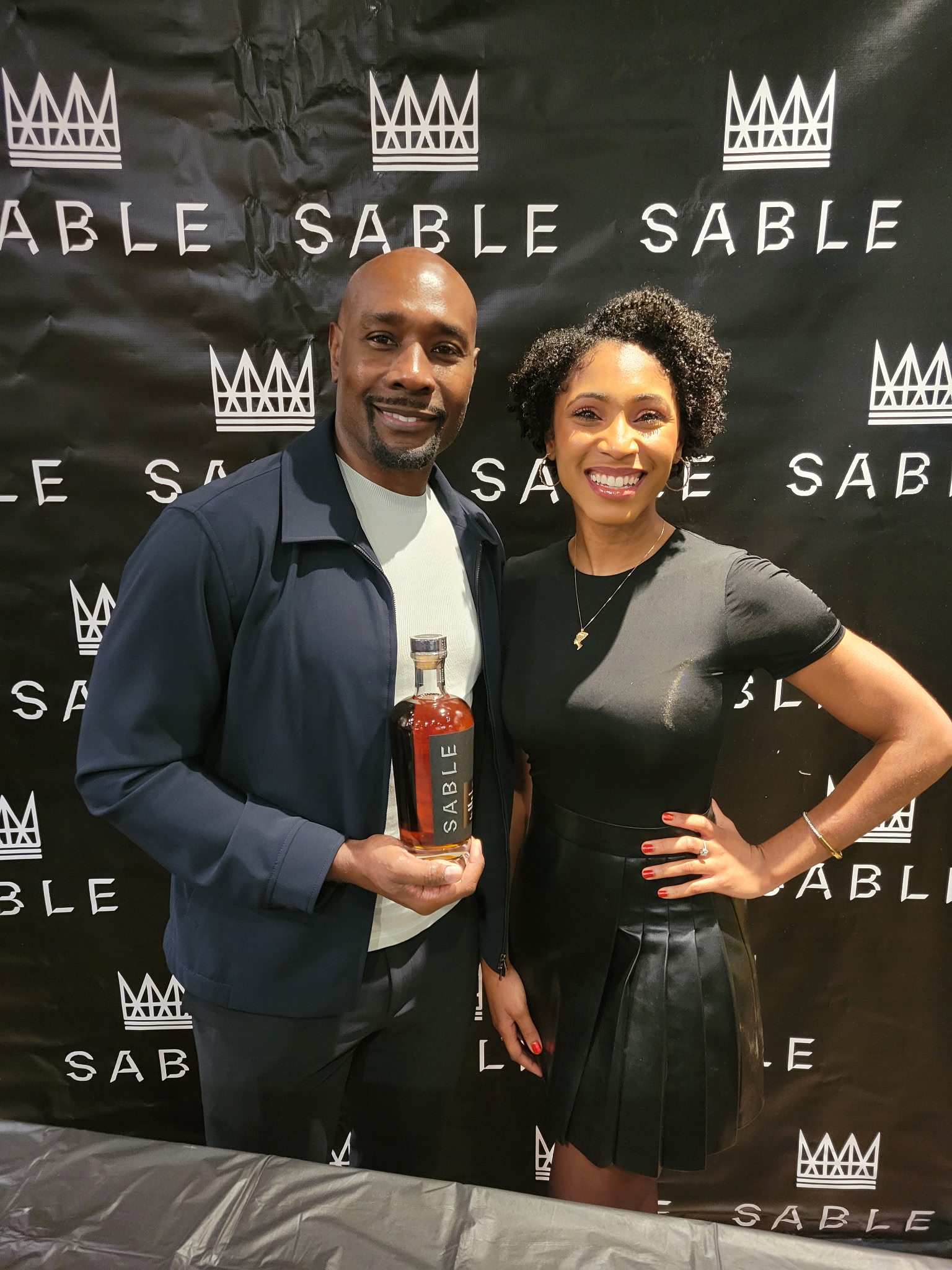
Amber Pickens: It is such an honor to chat with you today. Congratulations on your career in entertainment and, most recently, your
new bourbon, Sable Bourbon.
Morris Chestnut: Thank you so much. I appreciate that.
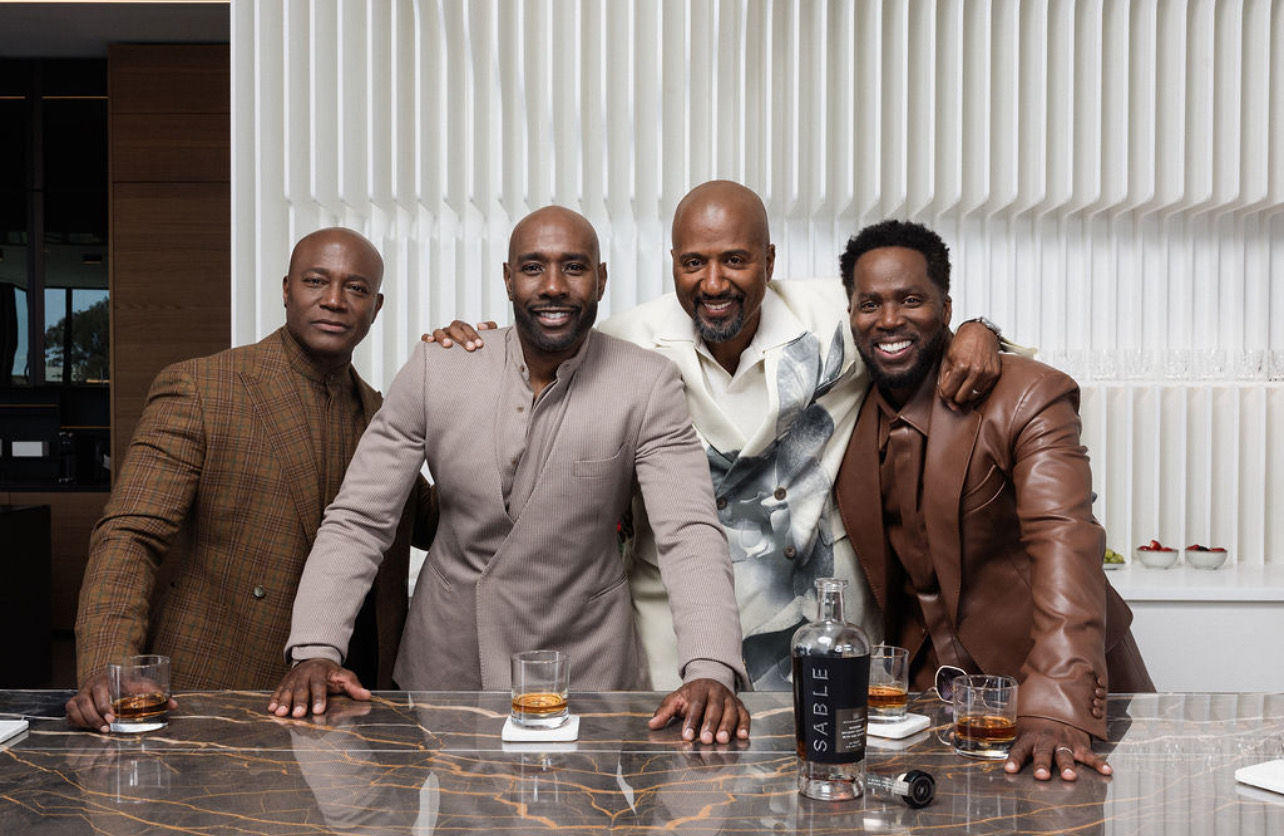
AP: I was really excited to learn that Sable is rooted in friendship, brotherhood, and almost 30 years of history with your fellow
thespians—the people you created The Best Man with, including Taye Diggs, Harold Perrineau, and director Malcolm D. Lee. What made
now the right time to turn that chemistry into a bourbon?
MC: Well, it all happened when we were shooting The Best Man: The Final Chapter. We’d been doing projects together for, let’s say, 30
years, and this was going to be the final time we worked together. While we were on set, Harold was like, “Listen, you know, we’ve really
enjoyed working with each other for so long, and we want to extend it.”
So, Harold presented the opportunity to us because he had a relationship with the distillery, and we were like, “Hey, that sounds
interesting!” We explored it, did a little bit of due diligence, and said, “Okay, let’s do it.”
It really gives us an opportunity to continue to work together, hang out, have fun, and do great business with each other.
AP: Now, that’s amazing! I learned that sable means a lot of different things, but you all are really focusing on the term Black. The brand
focuses on connection, heritage, and culture. What did you want people to feel when they pour a glass of Sable?
MC: Well, the one thing about Sable is that it works for every type of situation, right? In the movie The Best Man, we would drink it when
we were playing cards. There was always a brown liquor as part of the occasion—when we were having fun and playing cards. We would
also have brown liquor around when we were consoling someone, like Taye’s character when he was going through something.
So, that’s one of the things we love about the bourbon. It can be for all occasions. It can be for happy occasions. It can be for consoling
occasions. It can be for a number of occasions. The main thing for us is that we wanted it to be an extension of all the emotions and
feelings people experienced while watching the movie.
AP: Wow! You’ve spent more than three decades in entertainment, from Boyz n the Hood to The Best Man to Watson, and you’ve
recently celebrated four seasons of Reasonable Doubt. What do you understand about longevity that you didn’t understand when you
first started?
MC: Wow, that’s a great question. One of the reasons I’ve been able to sustain my career—and this wasn’t a calculated situation; it’s just
who I am—is that I’ve always treated people with respect, regardless of how high or low they were on the proverbial totem pole that
people always mention.
So, just reflecting back, that has taken me a long way. Again, it wasn’t calculated; it’s just who I am. I always try to convey that to people:
Just treat people with respect, no matter where they are or what you think you can get from them—or whether you think you can get
anything from them at all. Just treat people with respect, period.
AP: Amen! I completely agree. You’ve watched Hollywood change dramatically over those decades—
MC: Ah, yes!
AP: —and we’ve seen recent changes with the push toward artificial intelligence—
MC: For sure.
AP: What has been the secret to staying relevant without losing who Morris Chestnut is?
MC: Well, one thing that was definitely intentional was that I always knew I never wanted to lose who I was. I was always aware of the
industry, and I understood how the industry can affect you if you’re not grounded in a number of ways—physically, spiritually, and
emotionally. The industry can really have its way with you.
But when I was younger, when I first started out, I always knew I wanted the industry to be a part of my life, but not my life.
You know, I have the same friends I’ve had since the second grade. Yes, I have more friends now, and I’ve added some throughout the
years. But most of my friends go way back. Most of my core friends go back 30, 40, even 50 years.
AP: And you’ve gone from actor to producer and now entrepreneur. At what point in your career did you realize, “I don’t just want to be
in the room; I want to build the room”?
MC: That’s always been a goal of mine, probably for the last 20 years or so. I wanted to get involved in projects and bring some of the
things I wanted to see to life—the messaging behind certain projects, films, and television shows that I wanted people to hear.

For at least the last 20 years, I’ve felt that way. For the first part of my career, I was just an actor trying to get a job, trying to stay afloat.
Because, even though, as actors, once we get a job, we know we’re going to be unemployed again soon. So, it’s just chasing that carrot.
I’d probably say that, for the last 20 years or so, I’ve really wanted to build.
AP: Okay, and if you could sit down with Morris at the age of 20, when you were just getting started on this Hollywood journey,
knowing what you know now, what would you tell him about the journey ahead?
MC: Wow, that’s a great question. It’s a difficult one.
If I could sit down with the Morris who was just starting out, knowing that I’d still be working to this day and would have had all the
opportunities I’ve had throughout the years, I would tell my younger self to slow down, take in the experience, and enjoy it more.
Because, for me, it’s always been that once I’m on one job, I’m trying to get to the next job. Even when I’m promoting one job, I’m still
thinking about the next one. It’s really hard to just sit back and take in the moment and appreciate that particular job.
I’d tell the younger Morris, “Just slow down, enjoy the journey, savor the experience, and know that you’re going to be okay.”
AP: Well, thank you so much for chatting with me today and inspiring me throughout my own artistic journey. Thank you so much, and
congratulations!
MC: Thank you, thank you! And continued success to you. Good luck with your future endeavors as well.