

 For me, voting has never been theoretical. It has always been personal, rooted in memory, history, and the quiet moments when courage is tested. Democracy does not exist simply because it is written into law. It endures only when people are willing to show up for it, even when
doing so reopens old wounds.
In the year 2000, I was sitting in a political science class at Tuskegee University when Ms. Flowers, the president of the local Tuskegee NAACP chapter, pulled up to our building in a school bus. She walked briskly into our classroom with the kind of confidence that assumes agreement before permission is ever asked. Her request was simple and urgent: Get up. Leave your things. We’re going to Selma. She wanted our class to accompany her immediately to Selma, Alabama, to assist with voter access and voter protection efforts in a historic mayoral election between James Perkins Jr. and Joseph Smitherman, the same Joseph Smitherman who, in 1965, had publicly referred to Dr. Martin Luther King Jr. using a racial slur. What we had been studying in textbooks had suddenly stepped into the room. History was no
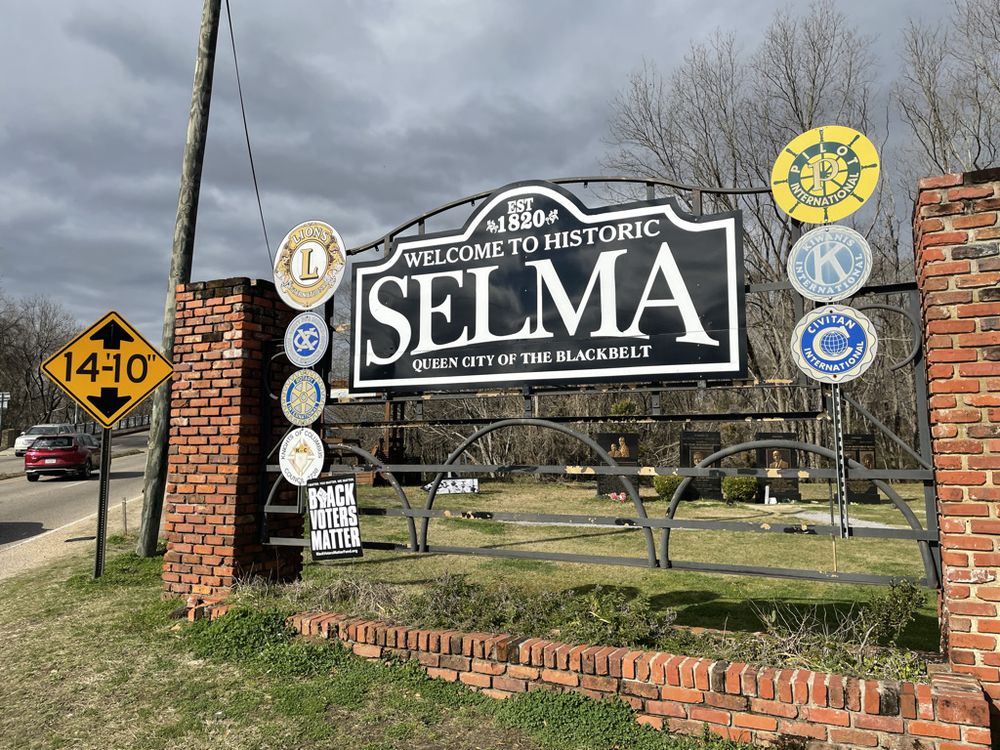
longer theoretical. It was asking us to board a bus. We were allowed a brief moment to call our parents. My mother encouraged me to go, but made me promise one thing: Don’t get arrested in Selma. Selma, a place etched into the American conscience, its soil still carries the weight of bloodshed, bravery, and unfinished promises from the civil rights movement.
I knew the story. I had seen the footage. But nothing prepared me for witnessing how close that history still lived to the surface. In certain Selma neighborhoods, men stood at polling locations gripping handfuls of leashes tethered to large dogs. The message did not need to be spoken. For many Black voters, especially elders, the sight alone was enough to reopen memories from the 1960s, when police dogs were used as instruments of terror against those who dared to demand their rights. That was what Ms. Flowers had brought us to confront:
history in real time.
I remember one older Black woman vividly. She wanted to vote. She came prepared. But fear overtook her body. Five of us surrounded her, forming a protective circle, and tried again and again to walk her to the door. Each time we drew closer, the dogs barked, and history rushed back in on her. Her hands shook. Her breathing shortened. Eventually, we physically carried her across the threshold of the polling place,
our bodies forming a barricade between her and the dogs. That moment has never left me. It remains a constant reminder of the blood-soaked sacrifices woven into the fabric of the right to vote in America.

That election ultimately resulted in the historic victory of James Perkins Jr., who became Selma’s first Black mayor. Selma once again stood at a crossroads between regression and progress. My understanding of voting had been shaped by history long before Selma, but Selma made that history personal. It taught me that the right to vote is not a passive inheritance, but a responsibility carried forward, often by people who risked far more than inconvenience to exercise it.
I’ve come to understand that our relationship to voting is shaped by moments. For me, that moment was Selma, not as trauma, but as truth. A reminder that the right to vote has never been weightless. What I carried away from Selma was not instruction, but understanding: of how close history can be, and how easily the meaning of the right to vote can be lost if it is never made personal.