Understanding the Fatherless Crisis in Urban America Is Addressing the Root Causes of Community Instability
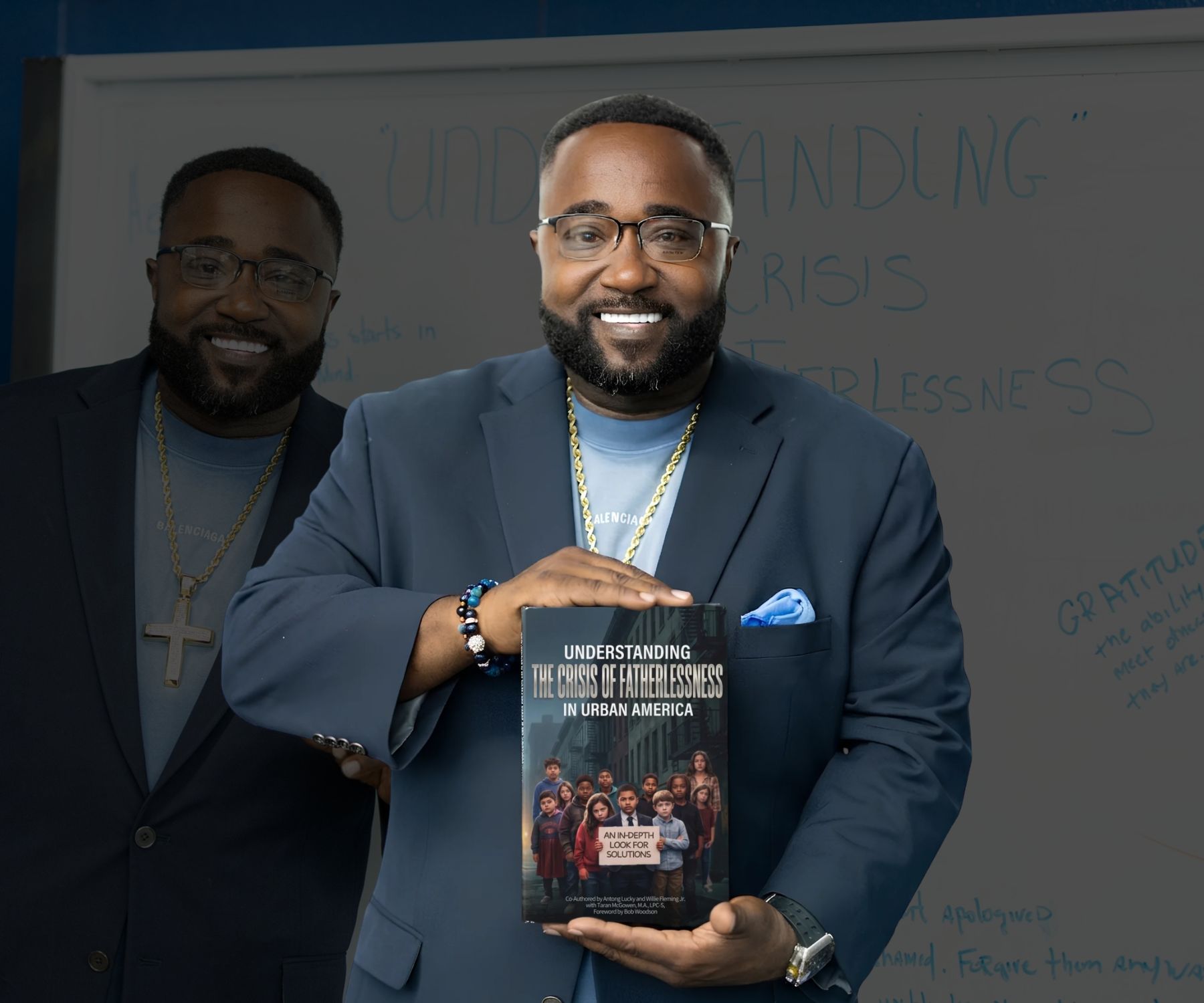
Across urban America, conversations about violence often focus on symptoms — crime rates, incarceration, school disruption, and economic instability. Yet beneath many of these outcomes lies a deeper and more complex challenge: buried resentment, unresolved trauma, and the absence of stable relational support. Understanding the Crisis of Fatherlessness in Urban America: An In-depth Look for Solutions, co-written by Antong Lucky, Willie Fleming, Antong’s prison mentor and Taran McGowen, Antong’s therapist argues that violence is not simply a community issue — it is an intergenerational trauma issue with community consequences.
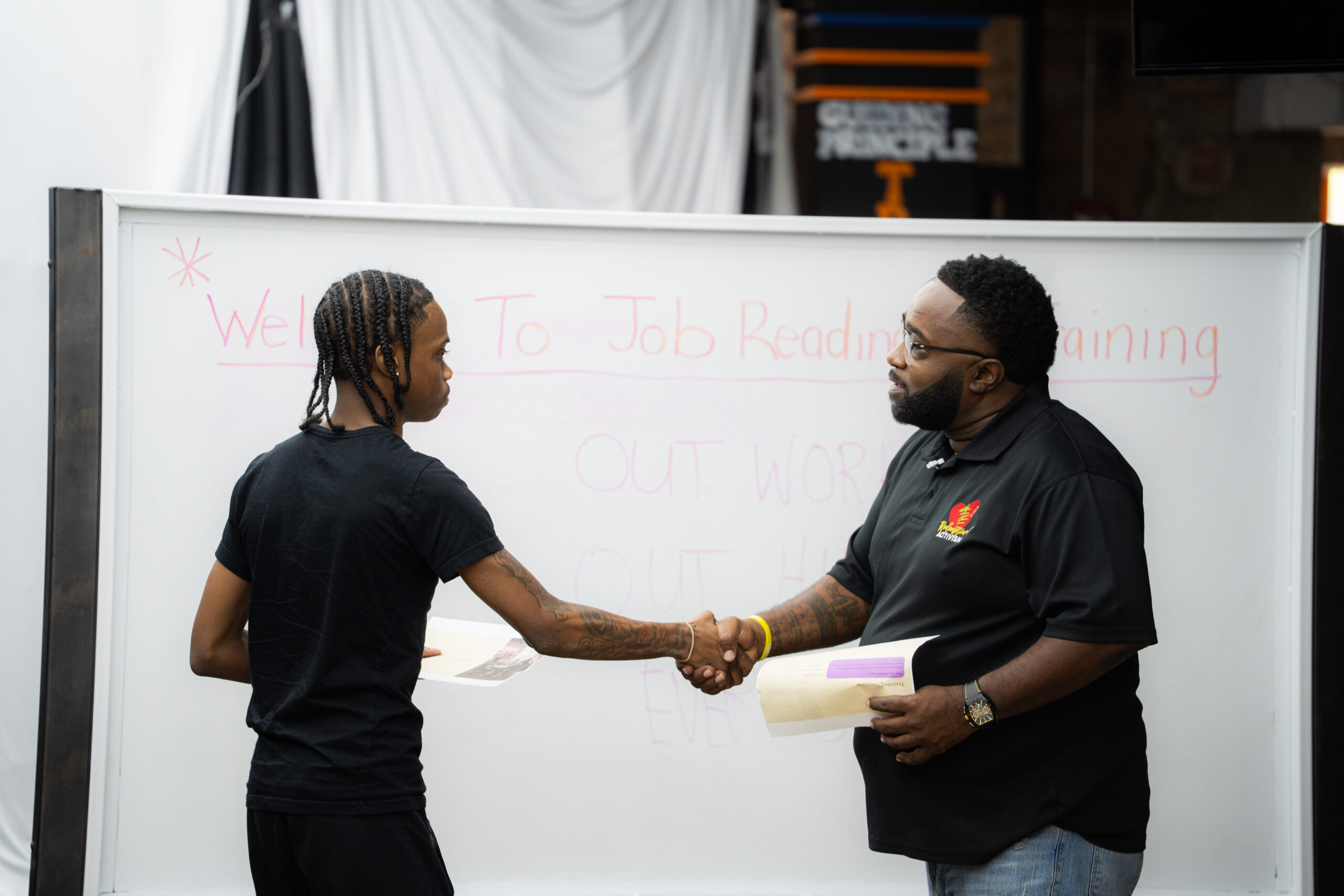
This understanding aligns closely with the work of Urban Specialists, an organization Antong Lucky runs that has spent over 30 years operating at the intersection of violence reduction, community engagement, leadership development, and healing-centered intervention.
Urban Specialists approach violence not merely as a law enforcement issue, but as a human development issue.
At the heart of the organization’s work and his new book is the recognition that many individuals most impacted by violence are not inherently violent — they are often navigating environments shaped by trauma, instability, lack of guidance, and unmet emotional needs. These realities mirror one of the central arguments in Understanding the Crisis of Fatherlessness: when foundational relationships are absent, people often seek identity, belonging, affirmation, and protection elsewhere.
The book introduces the concept of a “manufactured mentality” — a survival-based identity formed in the absence of healthy affirmation and leadership. Urban Specialists’ intervention model directly confronts this phenomenon by replacing destructive influences with structured mentorship, accountability, opportunity, and connection.
Through violence interruption efforts, credible messenger engagement, youth development, workforce pathways, leadership cultivation, and community-based support systems, Urban Specialists works to create what many individuals never experienced consistently: trusted relationships and environments that promote healing and personal responsibility.
Violence reduction is not only about interrupting moments of conflict — it is about rebuilding identity.
The themes explored in Understanding the Crisis of Fatherlessness suggest that unresolved father wounds can manifest as anger, emotional isolation, impulsivity, hyper-independence, unhealthy definitions of masculinity, and difficulty forming healthy relationships. Urban Specialists addresses these realities through human connection — meeting individuals where they are while challenging them to envision a different future.
One of the strongest parallels between the book and Urban Specialists’ approach is the belief that transformation happens through proximity. The book’s guiding principle — “Lack of Love is healed by Lots of Love” — reflects a philosophy visible in violence reduction work: sustained engagement, accountability, consistency, and authentic care create conditions for change. Not performative support. Not temporary intervention. But long-term investment.
“Lack of Love is healed by Lots of Love.”
This work acknowledges an important truth: reducing violence requires more than removing harmful behavior; or excessive enforcement it requires restoring purpose. By creating pathways for mentorship, emotional healing, leadership, and economic mobility, Urban Specialists demonstrate that communities can move beyond crisis management and toward generational transformation.
Ultimately, Understanding the Crisis of Fatherlessness in Urban America and the work of Urban Specialists point toward the same conclusion: people are not defined by what they lacked growing up. With intentional relationships, accountability, opportunity, and healing-centered support, cycles can be interrupted — and futures can be rewritten.
SD: Urban Specialists has been around for a minute formerly led by the late great Bishop Omar Jahwar How did his untimely death affect the organization?
AL: Before I address that, let me say “Happy Father’s Day” to the fathers. It is the month of June. Omar’s death affected me personally and the organization because he was a larger than life type of guy. He was a spiritual adviser, mentor and Father figure to me. His wisdom still guides the organization today. I owe my life to him and the mission of the organization.
SD: For those who may not know the work of Urban Specialists Can you give them a brief synopsis?
AL: Urban Specialists can be described as the Navy Seals of Dallas. We work in Violence prevention. We work to prevent the violence you see on the nightly news, we advocate for community through collaboration, economic empowerment and healing. If you are saddened by the killings on the news just imagine the situations our org has intervened in and prevented that don’t get reported or show up. It’s many. We are vested in several communities with our specialized RIDE program ( Re-educating, Incapaciting, De-esculating and Elevating). We also have one of the best entrepreneur programs in the city, BOSOE (Bishop Omar School of Entrepreneurs) and our signature OGU ( Original Guides United) program that teaches individuals and those with lived experiences how to use their influence for good.
SD: How did the idea of doing a book around the fatherlessness crisis in urban America come about?

AL: In my memoir A Redemptive Path Forward, I talk about the absence of my father who served 37 calendar years in prison and its effect on me. So as I started my journey of healing through therapy I realized my father’s absence was directly linked to most of the negative choices I made in life. Willie Fleming, my mentor, understood my journey from the first day I wrote to my father in prison as I sat in prison to our long conversations about my daughter who I left behind while in prison. He initiated the conversation about writing a book on the impact of fatherlessness. It’s been a part of my journey. Besides, Understanding the Fatherlessness Crisis in Urban America is a groundbreaking work that addresses one of the most urgent yet unexplored social crises of our time. Until now, no one has linked the violence we see throughout our urban cores around the nation with fatherlessness in the way we have in this book.
SD: I see that your therapist added her clinician perspective to the book. How did that come about?
Tara McGowen, LPC-S not only provided her professional commentary to the book but she recognized the work we were doing with creating healing circles and spaces to talk about the hurt of absentee fathers for very intensive active young men involved in the Drill Culture here in Dallas. Her practice Thrive House Wellness partnered to provide these young men therapy. She saw what we were doing and supported the effort at the onset. We are thankful for her in many ways. Thanks also to the City of Dallas and Annie E. Casey Foundation for partnering to serve Drill involved youth.
SD: Can you explain to my readers what Drill is?
AL: Drill is a subgenre of hip hop originated from Chicago. It’s a very confrontational, disrespectful, ominous, taunting, that often addresses real life conflicts. A lot of the violence we are seeing in real time stems from drill beefs. They mock the dead by making diss songs, desecrating grave sites of deceased individuals and target mothers and family members of their opposition. We are working with those individuals seeing some signs of progress. Underneath it all, are little boys who have a lot of anger and resentment stemming from not having fathers and will wreak havoc on anyone in their path.
SD: Father’s Day is approaching. What do you hope to achieve with this new book?
AL: We see great signs of progress and success stories unimaginable. We hope to end the premature murder of young black men by young black men we see over and over on the nightly news. We want to challenge the proverbial view of young boys being incorrigible, and introduce healing circles by creating spaces for young men to uncover those deep hidden feelings they’ve learned to bury in part because having a conversation about how they feel about their absentee fathers doesn’t exist. On a personal level, this book will be a blueprint and reminder for fathers to remain present in their children’s lives no matter what. We champion the idea that being Present is better than being Perfect. Also Organizationally, this will be a guide for institutions on how to work with intensive youth and achieve real transformation. We deal with the youth most programs avoid. We know for a fact this book will create meaningful dialogue around these issues. The solution to the Fatherlessness problem is in this book. Best Father’s Day gift you can give.
SD: A lot has been covered here. Thank you for the work you do in Dallas working in communities. How can someone help your organization Urban Specialists and where can we purchase the book?
AL: Thank you SDM for all that you do getting meaningful stories out. Before I ask someone to help Urban Specialists I would first like to say as my mentor taught me, Come see what we do. This book is a game-changer The book is for purchase: www.AntongSpeaks.com, Amazon, or on our publishing website www.literarylions.com