
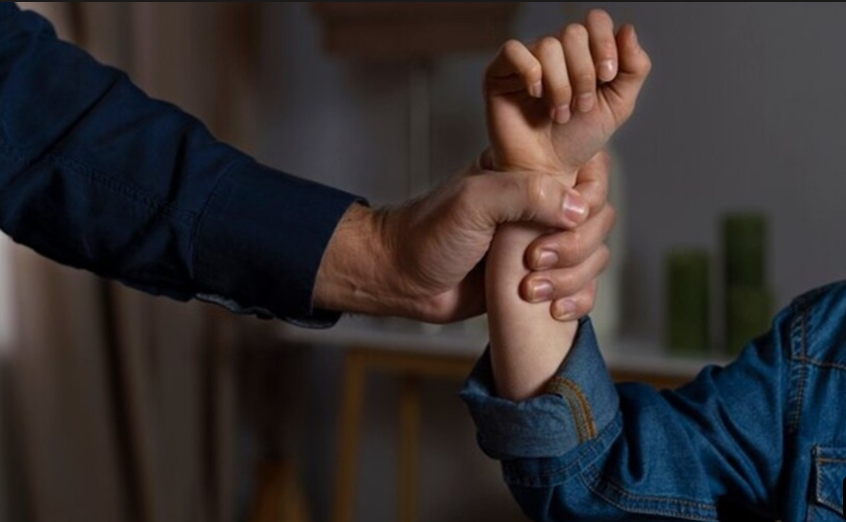


In April, former Virginia Lieutenant Governor Justin Fairfax killed his estranged wife, Dr. Cerina Fairfax, and then himself, according to police. Their children were home. In July, Oklahoma social media personality Sara Gilson was killed in a suspected murder-suicide involving her estranged husband; she had sought legal protection.
We hear the names because the people involved were known.
We should also hear this warning: these tragedies happen beyond the reach of television cameras, in families whose names never trend.
By the time domestic violence becomes a national headline, we are typically reading its final, tragic chapter.
That does not mean every tragedy could have been predicted. It means that when someone tells us they are concerned or afraid, we cannot afford to explain away what they are telling us.
Our work to understand domestic violence must begin much earlier.
The Violence Policy Center identified 237 murder-suicide incidents in the United States during the first six months of 2025, about nine each week. Sixty-five percent involved an intimate partner. Its estimate of more than 1,000 deaths for the full year comes from doubling the deaths counted in those six months; it is an estimate, not a complete year-end count. And behind every statistic are people, including children and loved ones whose lives have been changed forever.
The two 2026 cases remind us that the danger of domestic violence has not disappeared.
We Must Learn to Watch the Pattern
When a domestic homicide becomes national news, we focus on the final event.
I want us to look at what may be happening in a relationship before a crisis.
Is someone afraid to disagree? Is a partner monitoring their whereabouts, messages, or spending? Have they lost contact with friends or family? Are there threats, stalking, humiliation, or attempts to control whether they can work or leave? Has someone told us they feel afraid or controlled, even if they have not called it abuse?
No one on the outside can always know what is happening behind closed doors. And one argument does not tell us the whole story.
But a pattern of intimidation and control deserves to be taken seriously. Extreme jealousy is not proof of love. Constantly checking someone’s location, messages, or phone is not necessarily concern. Keeping someone away from family and friends is not protection. Controlling money or interfering with work is not leadership. Public humiliation, threats against children or pets, and making someone afraid to disagree are warning signs, even when there has been no physical assault. Sometimes the first evidence is not a bruise; it is the gradual disappearance of someone’s freedom.
Pressure Does Not Excuse Abuse
We cannot talk about relationships in this season without acknowledging the pressure people are under.
But let me be clear: pressure is never an excuse for abuse. The responsibility for abuse belongs to the person causing it.
The Centers for Disease Control and Prevention identifies economic stress, heavy substance use, poor behavioral control, jealousy, separation, and a desire for power and control among factors associated with intimate-partner violence.
These are risk factors, not a single explanation for abuse.
Across our nation, the pressure is personal: bills that do not stop coming, jobs that change, parents caring for children and aging loved ones at the same time, and people trying to hold a household together while they themselves feel stretched thin.
There is anxiety. There is anger. There is loneliness. And there are people who have never learned how to handle rejection, regulate their emotions, or accept that another person has the right to leave a relationship.
Millions of people face enormous stress without abusing anyone. Financial pressure is not permission. Anxiety is not permission. Divorce is not permission.
No amount of pressure gives anyone the right to control, threaten, or harm another person.
Learn and Listen Before Giving Advice
When someone begins talking about what is happening inside a relationship, listen. Do not rush to defend the person they are describing because that person is successful, respected, well dressed, or familiar to us. A beautiful home, a title, a pulpit, or a public following cannot tell us whether someone feels safe inside that home.

“Every marriage has problems.” “He or she is just under pressure.” “Pray about it.” We may mean well, but those words can close the door on someone who is trying to tell us they are afraid.
As a faith leader, I believe deeply in prayer, forgiveness, and restoration. I also believe that prayer must never become a substitute for protection. Forgiveness does not require a person to remain in danger. Protecting the image of a marriage, family, church, or respected leader must never become more important than protecting a life.
Our churches, schools, and workplaces should be places where people can speak without shame. We do not have to become investigators or promise that we can solve everything. We can listen without judging, say “I believe you; this is not your fault,” ask what support would be useful, and offer a connection to a trained domestic-violence advocate. And we should not confront an abusive partner on someone’s behalf or insist that the person leave immediately.
That last point matters because separation can be an especially dangerous period in an abusive relationship. “Just leave” sounds simple to someone looking in from the outside. For a person dealing with threats, children, housing, finances, or stalking, leaving may require a personal safety plan. Dallas organizations including The Family Place and Genesis Women’s Shelter & Support offer confidential help. Advocates and shelters in other communities can help people consider options that fit their circumstances.
Begin Before the Crisis
Domestic Violence Awareness Month must become more than wearing purple.
Awareness means teaching our young people that love does not demand ownership. It means equipping staff and ministry leaders to respond when someone discloses abuse. It means taking threats seriously, knowing where qualified help is available, and understanding that a survivor’s decisions belong to the survivor.
The signs will not always be visible to us.
No list can predict how a particular relationship will end.
But when someone finds the courage to say, “Something is not right,” we can choose not to minimize it.
For years, through my writing and advocacy, I have challenged the silence and shame that surround domestic violence. Today I want us to go one step further. Let us stop waiting until a crisis becomes public to become concerned. Let us learn to recognize control, listen when someone speaks, and connect people with the help they choose.
By the time we are reading the last chapter, someone has already lived through the pages before it. Will we listen while their story is still being told? Or just wait until the next headline?